Sustainability

The idea of sustainability is so elusive. It is not something you ever have or get, it’s a pursuit.

In the world of development, “sustainability” is the holy grail – as it should be. We want the good that projects deliver to deliver for the long-term, we want to avoid people who benefit from projects to become depend on the resources that projects give. We want people to be better off for the long-term, long after our temporary projects give their benefits. Development organizations and donors are always looking for the strategy for sustainability.

Our understanding of sustainability evolves and matures, partly from lessons from successful projects, but mainly lessons from failures. So often our projects are not “sustainable”. They do some good – always – but often that goodness fades and dissipates. Too often we seek “phase 2” of the good project, in the pursuit of sustainability, which remains elusive.

Last month, the Specialty Coffee Association (SCA) told us that our RENACER coffee program, and the Blue Harvest initiative, was selected as a finalist in for their annual sustainability award. They wrote us to ask, “How has your thinking about sustainability changed since starting Blue Harvest a decade ago?”

We responded that we are learning to understand that sustainability requires, as a foundation, three elements: (a) promoting processes versus implementing projects, (b) creating networks of local actors, and (c) transforming “systems”, e.g., markets – versus only creating small initiatives for a select group of actors.

Below is our longer reply to SCA:

Our understanding of sustainability has evolved and matured through our experience with Blue Harvest and Renacer. When we first started Blue Harvest, our focus was on making a “project” sustainable, working with a limit set of producers and coffee companies. Now, we recognize that sustainability requires (a) Promoting processes that are adaptive, long-term, and scalable; (b) Creating a network, or ecosystem, of diverse partners, where each partner collaborates toward a shared mission; and (c)Transforming systems, i.e., markets, to ensure that everyone involved in a value chain can sustain their businesses and be profitable. When all these elements come together, we can contribute to a truly sustainable economy, where diverse partners are intentional about creating good jobs and protecting the environment.


From the perspective of CRS, as a development agency, we have a better understanding of our role to support farmers and other supply chain partners. As an NGO, we do best when we act as facilitators of processes, playing the role of a catalyst, building trust amongst diverse partners. When our partners’ businesses thrive (e.g., farms, mills, and roasters), then it’s possible for these businesses to create jobs that pay living wages, while also protecting the environment.
How healthy soils lead to great coffee

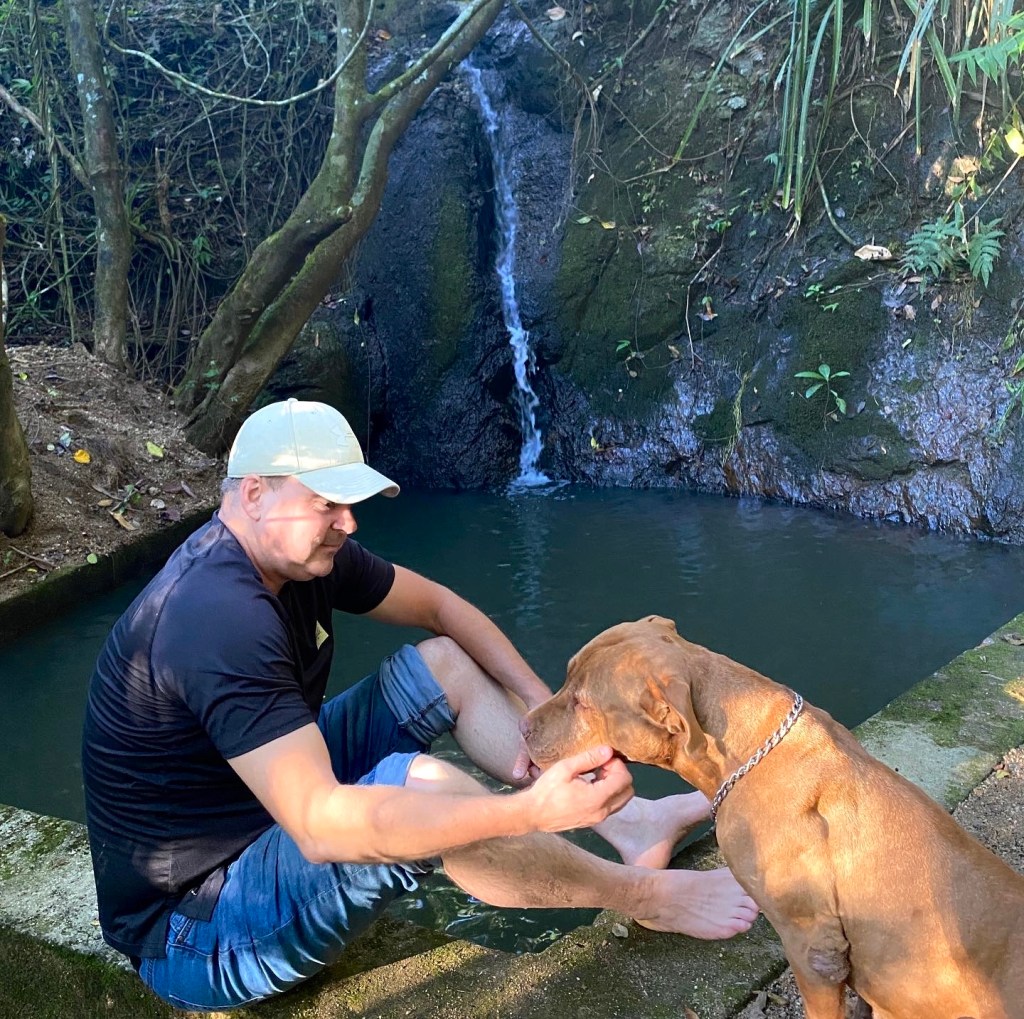
Ben Gravel with Bella, at their Cascadas farm in Chalatenango in El Salvador

At the RENACER coffee school, we promote sustainable farming practices that are proven to increase yields, and we train farmers how to select coffee for quality. All this has led to increased incomes for farmers. Double the yields and double the price, and we quadruple incomes for many farmers.

From experience, we know that healthy trees produce quality cherries, and ultimately better coffee beans. Part of this just makes intuitive sense. If trees are healthy and producing more cherries, a larger portion of cherries should also be healthy, and therefore producing a better quality coffee.

However, it is surprisingly hard to draw a through line that empirically connects: healthy soils, to healthy trees, to quality cherries, to quality beans, and finally to better coffee in the cup. We say this is the case, we want to believe it is the case, but there are so many factors that affect the quality of coffee between harvesting it and drinking it, that I am always a bit tentative in saying, “healthy soils produce better coffee”.

Over the past couple of months I have spent time on farms with Ben Gravel, the founder and owner of Ben’s Coffee in El Salvador. Ben is a rarity in the coffee world, in that he is involved in every aspect of coffee, from farm to store. He has a few farms where he is producing high quality coffee – applying innovative ecological farming practices; he processes his own coffee; he roasts it; and he retails coffee in his own shops. Ben knows coffee.

Last month, Ben and I met at the RENACER training school at Noruega Farm (owned by Los Naranjos Coffee). I wanted Ben to meet the team who run the school and the farm, and share ideas and insights about sustainable coffee production.

Ben has a depth of knowledge in coffee processing and roasting that is exceptional. In fact, I have never been on a farm with someone who understands so completely the connection between the coffee cherries on the tree and the quality of coffee that we ultimately taste in the cup. Ben and I have been talking through this connection over the past month, as he is currently harvesting, processing and roasting his own coffee.

A few days ago, he explained that he notices that coffee beans harvested from healthy trees tend to be more dense AND more uniformly dense throughout the whole bean. He explained how when these beans are roasted, the roast is more uniform throughout, producing a consistent taste profile and quality.

Ben attributes the uniformity in the quality of the bean in part to the balanced and complete nutrition that trees and cherries gain from healthy soils.

So, there it is. Agroecology meets Q-Grader. Healthy soils lead to better coffee.

There is so much more to learn and study on this connection, and I am excited about where this leads in 2023.

Water management is a proxy of the health of society

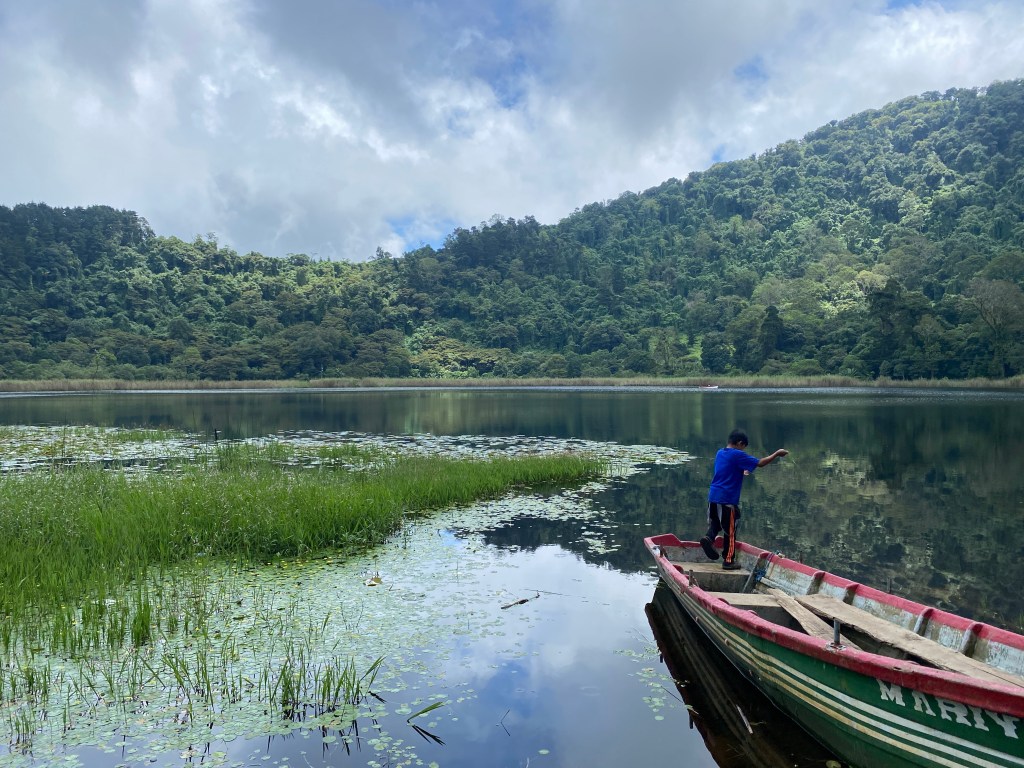
Laguna Verde in western El Salvador is the source of drinking water for thousands of people, threatened by pollutions and unregulated urban development.

When I was in the Peace Corps in Honduras in the early 90s, I worked on rehabilitating water systems for rural communities along the Caribbean coast. It was an incredible education on the challenges of getting people to work together to build a community water system. In virtually every community, discord and conflict impeded the ability to quickly move forward on designing and building systems. Most of the time, the sources of discord and conflict had nothing to do with water – the causes were usually about unresolved personal or social conflicts that surfaced when we needed people to agree on seemingly simple decisions, like the location of a water tank or the route of a pipeline. The psychology of a water system is complicated!

By the time I finished my Peace Corps service, I came to realize that if a community could build a water system – if they could overcome all the divisions to fund and build a shared water system – then they could pretty much do anything. An example is the community where I lived – Chachahuala – once the community built their water system, they quickly organized to fix the road and the school roof, both of which needed repairs for many years. It was only after the experience of building the water systems that they had the skills and confidence to do these other, simpler tasks.

Years later, I came across the concepts of “water governance” and “social capital”. And I realized that this insight from the Peace Corps could be extrapolated to a societal level. The ability of a society to manage their water resources is a good indicator of the health of a society to govern itself and manage its resources.

“Social capital” can be described as the ‘relationships and skills that enable society to manage public goods’.

This definition is paraphrased from Rogers and Hall at the Global Water Partnership.

The more I understand the challenges of managing water resources, the more I appreciate this deceptively simply definition.

Relationships and skills: these pretty much sum up our life as social creatures – creatures called to be ‘stewards of Creation.” We are called to develop our skills and cultivate relationships that make the world a better place – for us, for all creatures, and for the generations of people and creatures to come after us.

Public goods: the resources that we all need for our wellbeing and our economic development. The concept of a “public good” is a messy one for people who champion individual liberties. When what I do (with my personal freedom) impacts negatively on public goods, then my liberty interferes with others’ liberties. This is why it is so important that liberty is balanced with responsibility.

The way that water resources are managed serves as a very good indicator of “social capital” in a society, because water is a quintessential public good, which requires an extraordinary level of skills to manage, based on relationships across many levels of society.

This can be seen at many levels – from the management of a water system in a small, rural community to the management of a river system (Colorado, Amazon, Mekong) that span many states or countries.

As I write this, I think of this quote by Saint Peter of Alcántara:

“Truly, matters in this world are in a bad state, but the remedy is simple. You and I must first be what we ought to be.”

I think what we ought to be are people with skills to solve problems, cultivating healthy relationships with everyone – whether we like them or not.

Beyond The Source – The Co-Benefits Of Water-Smart Farm Practices

Last August (time is flying) we posted a summary of the Specialty Coffee Association’s Blueprint for Water Security in the Coffeelands.

That paper presented 6 recommendations “to support action by coffee stakeholders committed to increasing water security at origin”. I want to highlight one of the key SCA recommendations, and how it links to an exciting new report on water security.

Read More »

Coffee’s Water Footprint Needs To Be Revised

The Measure of Coffee’s Water Footprint Needs to Be Revised

This 2003 study on coffee’s water footprint reported that it requires 140 liters of water to produce one cup of coffee. This metric is quoted so frequently (including by this blog) that it’s almost assumed to be a fact.

However, the study needs a critical review because it is based on some critical conceptual and methodological flaws. These flaws distort our understanding of coffee’s impact on water resources, and may mislead management and policy decisions within the coffee industry.

Read More »